
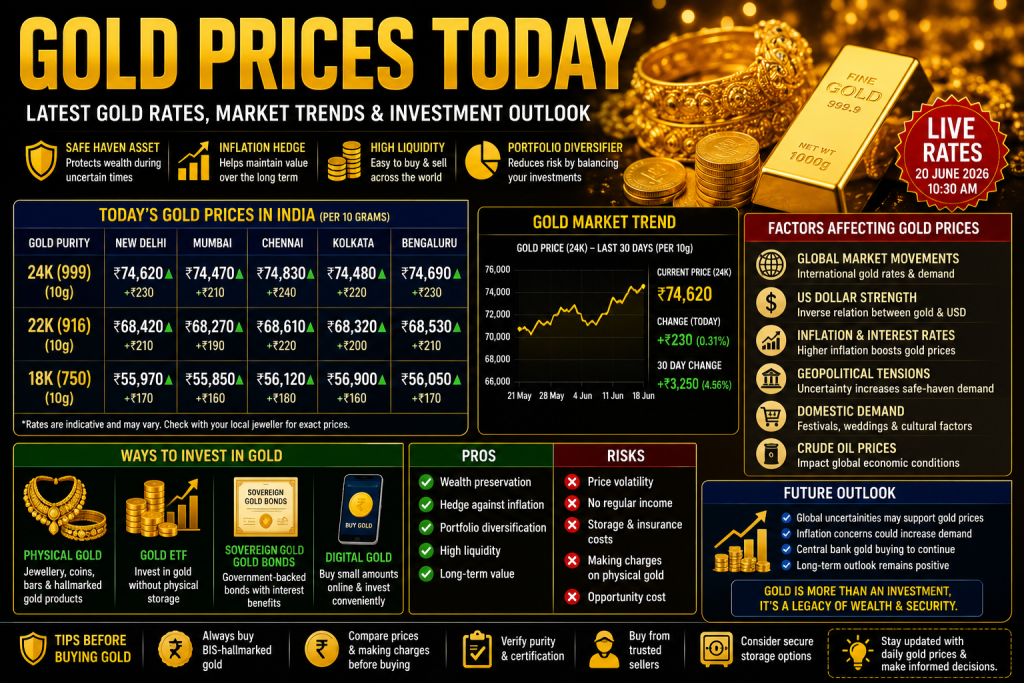
Gold has remained one of the most valuable and trusted assets throughout history. Whether purchased for investment, wealth preservation, jewelry, or cultural significance, gold continues to attract millions of buyers across the world. In India, gold plays an especially important role in personal finance, family wealth, weddings, and festive celebrations.
As global economic conditions continue to evolve, investors closely monitor gold prices to make informed purchasing and investment decisions. Understanding the factors behind gold price movements can help buyers maximize value and plan effectively.
This article explores today’s gold prices, major market drivers, investment opportunities, risks, and future outlook.
Why Gold Remains a Popular Asset
Gold has long been considered a safe-haven investment. During periods of economic uncertainty, inflation, financial market volatility, and geopolitical tensions, investors often turn to gold for stability.
Unlike many financial instruments, gold possesses intrinsic value and has historically preserved purchasing power over long periods. This makes it attractive for both conservative investors and those seeking portfolio diversification.
In India, gold is not only an investment asset but also a symbol of prosperity and financial security.
Understanding Gold Prices
Gold prices vary based on purity levels, market demand, and economic conditions.
24K Gold
24-karat gold contains approximately 99.9% pure gold and is commonly used for:
- Gold bars
- Gold coins
- Investment products
It is considered the purest form of gold available in the market.
22K Gold
22-karat gold contains approximately 91.6% pure gold mixed with other metals to improve durability.
It is widely used in:
- Jewelry manufacturing
- Wedding ornaments
- Traditional gold products
18K Gold
18-karat gold contains 75% pure gold and is frequently used for modern jewelry designs due to its durability and affordability.
Factors Affecting Gold Prices
Several important factors influence daily gold price movements.
1. International Gold Markets
Gold is traded globally. Changes in international gold prices directly impact domestic rates.
2. US Dollar Strength
Gold often moves inversely to the US dollar. A weaker dollar can make gold more attractive to investors worldwide.
3. Inflation
Gold is widely viewed as a hedge against inflation. Rising inflation generally increases investor interest in precious metals.
4. Interest Rates
Central bank interest rate decisions significantly influence gold demand. Lower interest rates often support gold prices.
5. Geopolitical Events
Wars, political instability, trade disputes, and global uncertainties frequently increase demand for safe-haven assets like gold.
6. Domestic Demand
In India, wedding seasons, festivals, and cultural celebrations often increase gold purchases and market demand.
Gold as an Investment Option
Gold offers multiple investment opportunities for different types of investors.
Physical Gold
Investors can purchase:
- Gold jewelry
- Gold bars
- Gold coins
- Hallmarked gold products
Physical ownership remains one of the most popular forms of gold investment.
Gold ETFs
Gold Exchange-Traded Funds allow investors to gain exposure to gold prices without physically storing the metal.
Sovereign Gold Bonds
Government-backed Sovereign Gold Bonds provide exposure to gold prices while also offering periodic interest payments.
Digital Gold
Digital gold platforms allow investors to buy small quantities online and build holdings gradually.
Benefits of Investing in Gold
Wealth Preservation
Gold has historically maintained value during economic uncertainty.
Portfolio Diversification
Adding gold can help reduce portfolio risk by balancing exposure to stocks and other assets.
Liquidity
Gold can generally be sold quickly when funds are required.
Inflation Protection
Many investors use gold as a long-term hedge against rising inflation and currency depreciation.
Risks Associated with Gold
While gold offers several advantages, investors should also understand the risks.
Price Volatility
Gold prices can fluctuate significantly in the short term.
No Passive Income
Unlike stocks or bonds, gold does not generate dividends or interest.
Storage Costs
Physical gold may require secure storage and insurance.
Opportunity Cost
During strong stock market periods, gold may underperform growth-oriented investments.
Future Outlook for Gold Prices
Several factors could continue supporting gold prices in the future:
- Global economic uncertainty
- Inflation concerns
- Central bank gold purchases
- Currency fluctuations
- Geopolitical tensions
- Rising investment demand
At the same time, strong economic growth and higher interest rates may create temporary pressure on gold prices.
Many financial experts continue to view gold as an important long-term wealth preservation asset.
Tips Before Buying Gold
Before purchasing gold, buyers should:
- Compare rates from multiple sellers
- Buy BIS-hallmarked gold
- Understand making charges
- Verify purity certifications
- Consider investment alternatives such as ETFs and Sovereign Gold Bonds
Careful planning can help maximize value while minimizing unnecessary costs.
Conclusion
Gold remains one of the most trusted assets for wealth preservation, investment, and financial security. Monitoring gold prices helps investors and consumers make informed decisions based on changing market conditions.
Whether purchased for investment purposes, portfolio diversification, or personal use, gold continues to play a crucial role in financial planning. By understanding market trends, economic influences, and investment options, individuals can better position themselves to benefit from long-term opportunities in the gold market.
As global economic conditions evolve, gold is likely to remain a valuable asset that attracts investors seeking stability, security, and long-term wealth protection.