
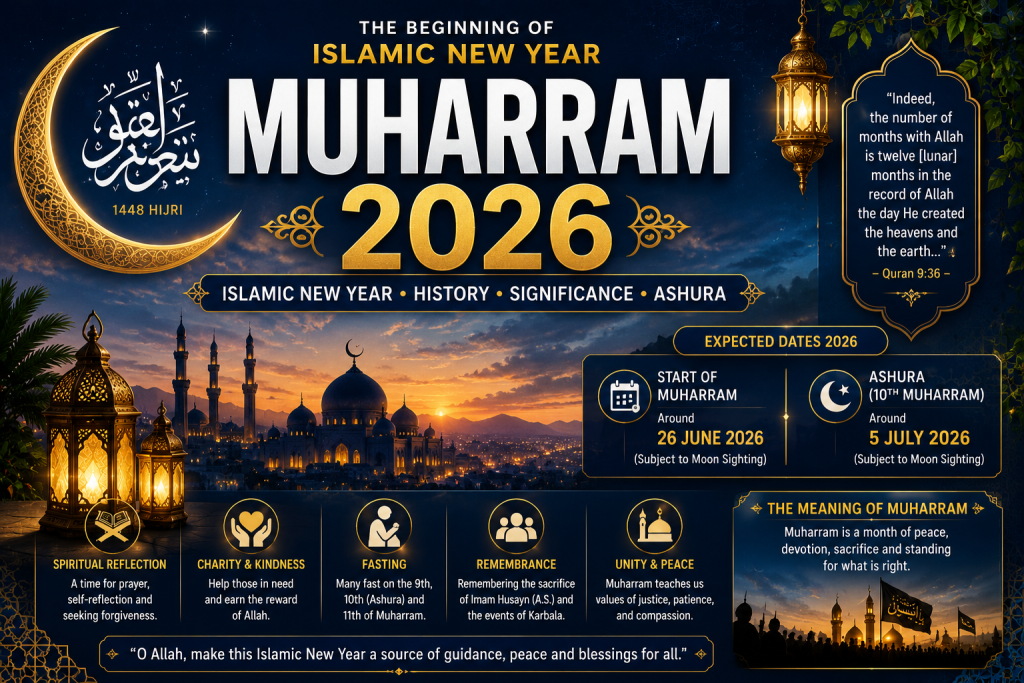
Muharram is one of the holiest months in Islam and marks the beginning of the Islamic (Hijri) New Year. Muslims around the world observe this sacred month with prayers, reflection, charity, and remembrance. Muharram 2026 is expected to begin in late June or early July, depending on the sighting of the moon, as the Islamic calendar follows the lunar cycle.
The first month of the Islamic calendar carries deep religious and historical significance. While many Muslims welcome the new Islamic year with prayers and spiritual reflection, the month is especially important because it includes the observance of Ashura, one of the most significant days in Islamic history.
When Is Muharram 2026?
The exact beginning of Muharram depends on the sighting of the new crescent moon.
Based on astronomical calculations:
- Expected Start of Muharram: Around 26 June 2026 (subject to moon sighting)
- Ashura (10th Muharram): Expected around 5 July 2026 (subject to moon sighting)
Official dates may vary by country depending on local moon-sighting committees.
What Is Muharram?
Muharram is the first month of the Islamic lunar calendar and is considered one of the four sacred months mentioned in the Quran.
During this month, Muslims are encouraged to:
- Increase acts of worship
- Offer voluntary prayers
- Perform charitable deeds
- Reflect on faith and righteousness
- Seek forgiveness and spiritual growth
It is regarded as a time of peace, devotion, and remembrance.
Why Is Muharram Important?
Muharram holds immense spiritual and historical importance.
For many Muslims, it marks:
- The beginning of the Islamic New Year
- A period of increased worship
- The remembrance of significant historical events
- Reflection on sacrifice, justice, patience, and faith
The month serves as a reminder of Islamic values and moral principles.
The Significance of Ashura
The 10th day of Muharram, known as Ashura, is one of the most important days of the Islamic calendar.
For many Sunni Muslims, Ashura is associated with historical events and voluntary fasting, following traditions that emphasize gratitude and devotion.
For many Shia Muslims, Ashura commemorates the martyrdom of Husayn ibn Ali at the Battle of Karbala. The day is observed with mourning, remembrance, and gatherings that honor his sacrifice and commitment to justice.
Historical Background
The events of Karbala took place in 680 CE in present-day Iraq.
Husayn ibn Ali, along with his companions, stood against injustice and was martyred during the battle.
His sacrifice remains a powerful symbol of:
- Courage
- Faith
- Justice
- Patience
- Standing against oppression
These values continue to inspire millions of people worldwide.
How Muharram Is Observed
Observances differ across Muslim communities and countries, but commonly include:
Prayer and Worship
Many believers spend additional time in prayer, reading the Quran, and seeking spiritual renewal.
Charity
Acts of generosity and helping those in need are encouraged throughout the month.
Fasting
Many Muslims voluntarily fast on Ashura, and some also fast on the ninth or eleventh day of Muharram according to Islamic traditions.
Religious Gatherings
Lectures, sermons, and community gatherings focus on Islamic history, values, and spiritual reflection.
Processions and Commemorations
In many regions, especially among Shia communities, peaceful commemorative processions and gatherings are held to remember the events of Karbala.
Muharram Around the World
Muharram is observed in many countries, including:
- India
- Pakistan
- Bangladesh
- Iraq
- Iran
- Saudi Arabia
- United Arab Emirates
- Indonesia
- Malaysia
- Turkey
Each country observes the month according to its local customs while maintaining its core religious significance.
Public Holidays
Many countries declare a public holiday on Ashura or during Muharram.
Government offices, schools, banks, and businesses may operate on modified schedules depending on local regulations.
Importance of the Islamic New Year
Unlike many New Year celebrations around the world, the Islamic New Year is generally observed with simplicity and spiritual reflection rather than large public festivities.
For Muslims, it offers an opportunity to:
- Reflect on the past year
- Strengthen faith
- Set spiritual goals
- Increase acts of kindness
- Renew commitment to religious values
Messages of Muharram
The month teaches several timeless values:
- Faith
- Compassion
- Sacrifice
- Justice
- Patience
- Unity
- Generosity
These principles continue to inspire individuals and communities across generations.
Conclusion
Muharram 2026 marks the beginning of another Islamic year and offers Muslims worldwide an opportunity for reflection, worship, and remembrance. Whether through prayer, fasting, charity, or commemorating the events of Karbala, the month encourages believers to strengthen their faith and uphold values of justice, compassion, and perseverance.
As the exact dates depend on moon sightings, Muslims are encouraged to follow announcements from their local religious authorities for the official beginning of Muharram and the observance of Ashura.