
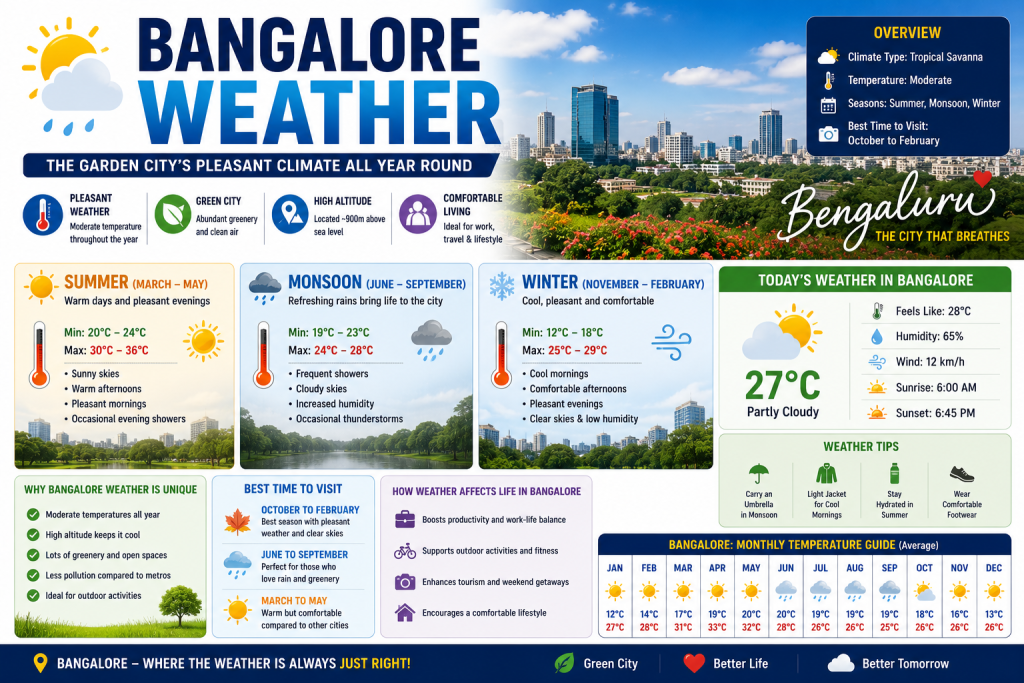
Bangalore, officially known as Bengaluru, is often referred to as the “Garden City of India” and the “Silicon Valley of India.” Apart from its thriving IT industry and vibrant culture, the city is also famous for its pleasant weather. Unlike many major Indian cities that experience extreme temperatures, Bangalore enjoys a relatively moderate climate throughout the year.
Its elevation of approximately 900 meters above sea level contributes significantly to its comfortable temperatures, making it one of the most desirable cities to live in and visit. Whether you are planning a trip, relocating for work, or simply curious about the city’s climate, understanding Bangalore weather can help you prepare better.
Overview of Bangalore’s Climate
Bangalore experiences a tropical savanna climate with relatively mild temperatures compared to many other Indian cities.
The city’s weather is characterized by:
- Moderate temperatures
- Pleasant mornings and evenings
- Seasonal rainfall
- Mild winters
- Comfortable summers
Due to its elevated location, Bangalore rarely experiences extreme heat or severe cold.
Summer Weather in Bangalore
Summer in Bangalore generally lasts from March to May.
Temperature Range
During summer, temperatures usually range between:
- Minimum: 20°C to 24°C
- Maximum: 30°C to 36°C
While afternoons can become warm, they are generally more comfortable than in cities such as Delhi, Mumbai, Chennai, or Hyderabad.
Summer Characteristics
Common summer weather conditions include:
- Sunny skies
- Warm afternoons
- Pleasant mornings
- Occasional evening showers
- Moderate humidity
Many residents find Bangalore summers manageable due to cooler nighttime temperatures.
Monsoon Season in Bangalore
The monsoon season typically extends from June to September.
Rainfall Patterns
Bangalore receives rainfall from both:
- Southwest Monsoon
- Northeast Monsoon
Rainfall intensity can vary significantly depending on weather systems affecting Karnataka.
Monsoon Characteristics
During this period, residents can expect:
- Frequent showers
- Cloudy skies
- Increased humidity
- Cooler temperatures
- Occasional thunderstorms
The city often looks particularly beautiful during the monsoon as parks, gardens, and tree-lined roads become greener.
Challenges During Monsoon
Although rainfall brings relief from summer heat, it can also lead to:
- Traffic congestion
- Waterlogging in certain areas
- Travel delays
- Reduced visibility during heavy rain
Despite these challenges, many people consider monsoon one of the most enjoyable seasons in Bangalore.
Winter Weather in Bangalore
Winter usually lasts from November to February.
Temperature Range
Winter temperatures typically range between:
- Minimum: 12°C to 18°C
- Maximum: 25°C to 29°C
The weather remains pleasant throughout the season.
Winter Characteristics
Residents and visitors often enjoy:
- Cool mornings
- Comfortable afternoons
- Pleasant evenings
- Clear skies
- Low humidity
Unlike northern Indian cities, Bangalore does not experience severe winter conditions.
Why Bangalore Weather Is Unique
Several geographical factors contribute to Bangalore’s favorable climate.
High Elevation
The city’s altitude helps moderate temperatures throughout the year.
Green Cover
Parks, gardens, and tree-lined neighborhoods contribute to a more comfortable urban environment.
Wind Patterns
Regular airflow helps reduce heat buildup compared to densely populated metropolitan regions.
Moderate Seasonal Variations
Temperature differences between seasons remain relatively small compared to many other parts of India.
Best Time to Visit Bangalore
Bangalore can be visited throughout the year, but some periods are particularly popular.
October to February
This is generally considered the best time to visit because of:
- Pleasant temperatures
- Comfortable sightseeing conditions
- Outdoor event opportunities
- Clear skies
June to September
Travelers who enjoy rain and lush greenery may appreciate the monsoon season.
March to May
Summer remains manageable compared to many Indian cities, making travel possible throughout the season.
How Bangalore Weather Affects Daily Life
The city’s climate plays an important role in:
Work Environment
Pleasant weather contributes to Bangalore’s reputation as a preferred destination for technology companies and professionals.
Outdoor Activities
Residents frequently enjoy:
- Walking
- Cycling
- Running
- Gardening
- Outdoor dining
Tourism
Comfortable temperatures make sightseeing more enjoyable throughout much of the year.
Weather Trends and Climate Changes
Like many cities around the world, Bangalore has experienced changes in weather patterns over recent years.
Some commonly observed trends include:
- Warmer summers
- Irregular rainfall distribution
- Increased urban heat effects
- More frequent heavy rainfall events
Environmental experts continue to emphasize sustainable urban development and preservation of green spaces to maintain the city’s climate advantages.
Tips for Residents and Travelers
During Summer
- Stay hydrated
- Wear light clothing
- Use sunscreen
- Plan outdoor activities during mornings or evenings
During Monsoon
- Carry an umbrella
- Monitor weather forecasts
- Allow extra travel time
- Wear waterproof footwear
During Winter
- Keep a light jacket for mornings and nights
- Enjoy outdoor activities during the day
Conclusion
Bangalore weather remains one of the city’s greatest attractions. Its moderate temperatures, pleasant climate, and relatively mild seasonal variations make it an appealing destination for residents, students, professionals, and tourists alike.
Whether experiencing cool winter mornings, refreshing monsoon showers, or comfortable summer evenings, Bangalore offers a climate that is often considered among the best in India. While changing weather patterns present new challenges, the city continues to be known for its enjoyable year-round weather.
For anyone planning to visit or move to Bengaluru, understanding seasonal trends can help ensure a comfortable and enjoyable experience.