
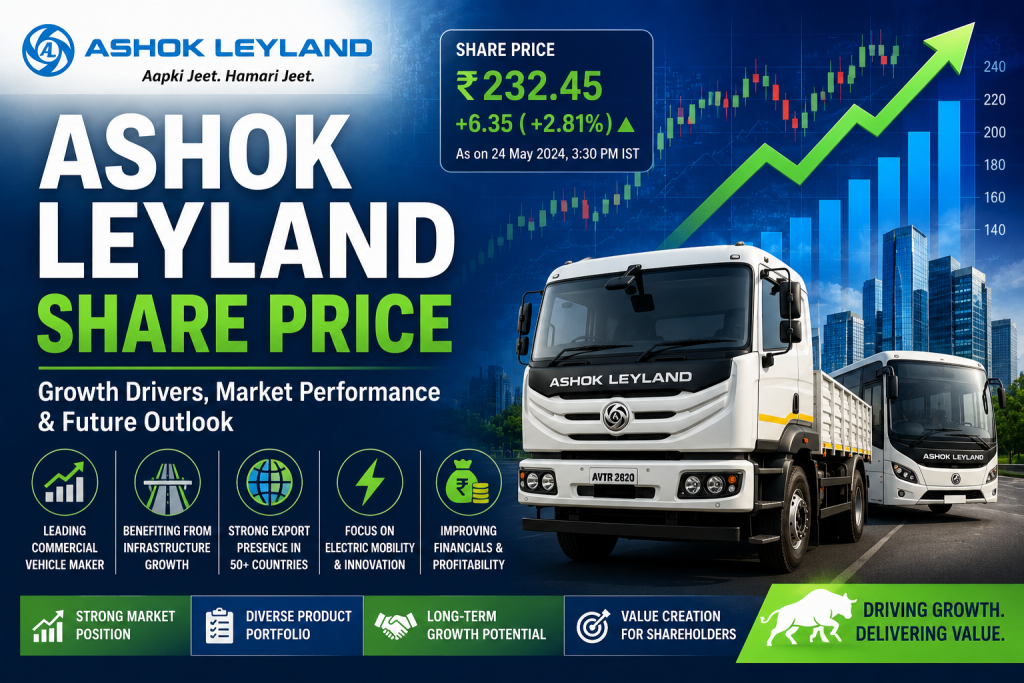
Ashok Leyland is one of India’s most recognized automobile manufacturers and a dominant player in the commercial vehicle industry. The company’s stock frequently attracts attention from investors due to its strong market position, expanding product portfolio, and exposure to India’s infrastructure and logistics growth story.
The Ashok Leyland Share Price is influenced by multiple factors, including commercial vehicle demand, economic growth, government infrastructure spending, fuel prices, and overall market sentiment. For investors looking at India’s transportation and manufacturing sectors, Ashok Leyland remains a company worth monitoring closely.
About Ashok Leyland
Founded in 1948 and part of the Hinduja Group, Ashok Leyland is one of India’s leading manufacturers of trucks, buses, light commercial vehicles, defense vehicles, and power solutions. The company operates in more than 50 countries and has established itself as one of the largest commercial vehicle manufacturers globally.
Ashok Leyland is India’s second-largest commercial vehicle manufacturer and holds a significant market share in medium and heavy commercial vehicles as well as buses.
Why Investors Follow Ashok Leyland Share Price
Leadership in Commercial Vehicles
The company has built a strong presence in trucks, buses, and logistics vehicles, making it a key beneficiary of India’s growing transportation sector.
Infrastructure Growth Opportunity
As India continues investing in highways, logistics networks, manufacturing hubs, and construction projects, demand for commercial vehicles is expected to remain strong.
Growing Export Business
Ashok Leyland exports vehicles to numerous international markets, creating additional revenue opportunities beyond India.
EV and Future Mobility Expansion
The company is actively investing in electric mobility through its EV initiatives and manufacturing facilities, positioning itself for future transportation trends.
Factors Affecting Ashok Leyland Share Price
1. Commercial Vehicle Demand
Sales of trucks, buses, and logistics vehicles have a direct impact on company revenue and profitability. A strong commercial vehicle cycle often supports stock performance.
2. Infrastructure Spending
Government investment in roads, logistics, ports, and industrial projects increases demand for commercial transportation solutions.
3. Fuel Prices
Fuel price fluctuations can influence transportation activity and vehicle purchasing decisions, indirectly affecting commercial vehicle demand.
4. Raw Material Costs
Steel, aluminum, and other commodity prices impact manufacturing costs and profit margins.
5. Economic Growth
A growing economy generally drives freight movement, industrial activity, and infrastructure development, all of which benefit commercial vehicle manufacturers.
Recent Business Performance
Ashok Leyland has demonstrated strong growth in revenue, profitability, and market presence over recent years. The company continues to benefit from commercial vehicle demand, infrastructure spending, and expanding exports. Recent financial data shows growth in revenue and earnings, while analysts continue to maintain a generally positive outlook on the stock.
The company has also maintained dividend payouts and improved profitability compared with earlier business cycles.
Growth Opportunities
Infrastructure Boom in India
India’s continued focus on highways, industrial corridors, logistics parks, and smart city projects may increase demand for commercial vehicles.
Logistics Sector Expansion
The rapid growth of e-commerce and supply chain modernization creates additional opportunities for truck and fleet sales.
Electric Vehicle Segment
Ashok Leyland’s investments in electric buses and future mobility solutions could contribute to long-term growth.
Export Market Growth
Expanding international operations may help diversify revenue streams and reduce dependence on domestic demand.
Defense Vehicle Business
The company’s defense vehicle segment provides another avenue for growth as government spending in this area increases.
Risks Investors Should Consider
Cyclical Industry
Commercial vehicle demand often follows economic cycles. Slowdowns in economic activity can impact vehicle sales.
Commodity Price Volatility
Higher raw material costs may pressure margins and profitability.
Competitive Market
Ashok Leyland competes with major players in the commercial vehicle sector, making market share retention important.
Economic Slowdowns
Reduced industrial production and logistics activity can affect demand for trucks and commercial vehicles.
Regulatory Changes
Changes in emission standards, taxation policies, and transportation regulations may increase operational costs.
Is Ashok Leyland a Good Long-Term Investment?
Many investors consider Ashok Leyland an attractive long-term stock because of its leadership position in commercial vehicles, infrastructure-linked growth opportunities, and expansion into electric mobility.
The company has delivered strong profit growth over recent years while maintaining healthy returns and dividend payouts. It has also reduced debt and improved operational efficiency.
However, investors should remember that automobile and commercial vehicle stocks are cyclical and can experience periods of volatility.
Future Outlook
The future outlook for Ashok Leyland Share Price largely depends on:
- Commercial vehicle demand
- Infrastructure spending
- Export growth
- EV adoption
- Economic expansion
- Commodity price trends
Management has recently indicated confidence in continued commercial vehicle demand despite cost pressures and market volatility.
As India continues to modernize its transportation and logistics infrastructure, companies like Ashok Leyland could remain important beneficiaries of long-term economic growth.
Conclusion
Ashok Leyland remains one of India’s strongest commercial vehicle manufacturers and a major participant in the country’s transportation ecosystem. Its leadership position, expanding product portfolio, infrastructure exposure, and growing EV initiatives make it a stock that many investors continue to follow closely.
While risks such as economic cycles and raw material costs remain, the company’s long-term growth prospects appear tied to India’s ongoing industrial and infrastructure development. Investors should evaluate fundamentals, market conditions, and risk tolerance before making investment decisions, but Ashok Leyland continues to be a significant stock in the Indian automobile sector.