
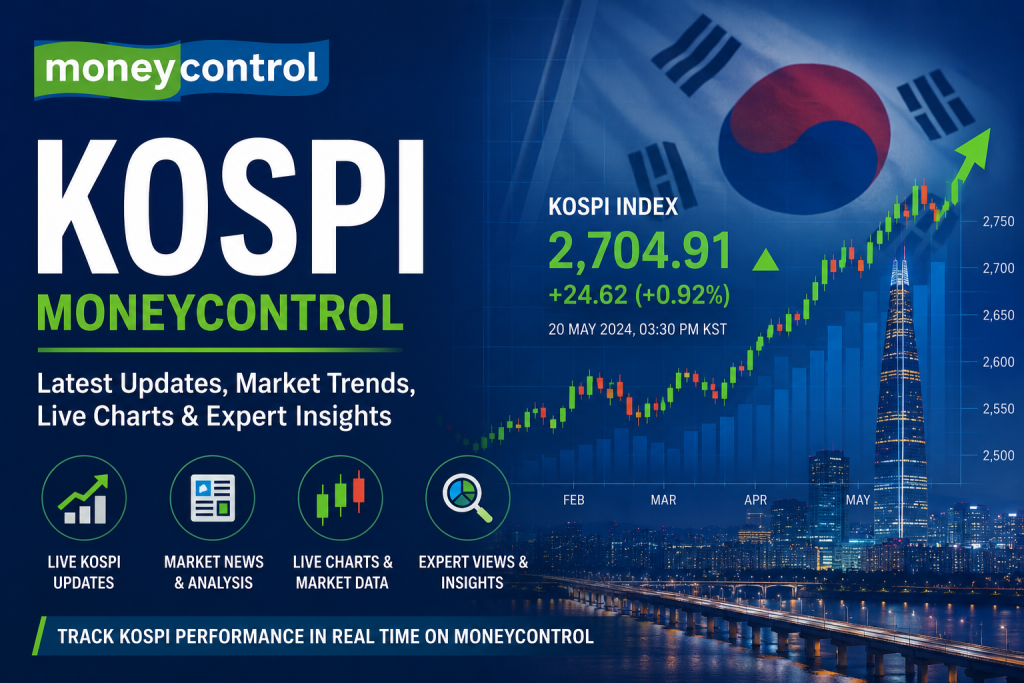
Global financial markets have become increasingly interconnected, allowing investors to monitor and participate in economic growth across different countries. Among Asia’s most important stock market indices is the KOSPI, which serves as a key indicator of South Korea’s economic performance and corporate strength. Investors, analysts, and traders frequently use platforms like Moneycontrol to track the KOSPI Index, monitor market trends, and stay informed about developments affecting the South Korean stock market.
Understanding how KOSPI works and how to effectively use Moneycontrol for market analysis can help investors make more informed decisions. Whether you are a beginner exploring global markets or an experienced investor seeking international exposure, the KOSPI deserves attention as one of Asia’s most influential stock indices.
What Is KOSPI?
KOSPI stands for the Korea Composite Stock Price Index. It is the primary stock market index of South Korea and tracks the performance of companies listed on the Korea Exchange (KRX).
The index includes some of South Korea’s largest and most globally recognized corporations operating across industries such as:
- Technology
- Electronics
- Automotive
- Chemicals
- Financial Services
- Telecommunications
KOSPI is often viewed as a benchmark for South Korea’s overall economic health and investor confidence. Similar to how the Nifty 50 represents the Indian stock market and the S&P 500 reflects the United States market, KOSPI serves as a leading indicator of South Korean market performance.
Why Investors Follow KOSPI on Moneycontrol
Moneycontrol is one of the most popular financial information platforms among investors. It provides access to market data, financial news, stock analysis, and economic updates from markets around the world.
Investors track KOSPI on Moneycontrol because the platform offers:
Real-Time Market Updates
Market participants can view live KOSPI movements throughout trading sessions. Real-time tracking helps investors understand current market sentiment and respond quickly to changing conditions.
Historical Performance Data
Analyzing historical trends allows investors to evaluate long-term market behavior and identify patterns that may influence future performance.
Financial News Coverage
Global events, policy decisions, economic reports, and corporate earnings can significantly affect the KOSPI Index. Moneycontrol provides timely updates that help investors stay informed.
Technical Analysis Tools
Charts, indicators, and market statistics available on Moneycontrol assist traders and analysts in evaluating market opportunities.
Global Market Comparisons
Investors can compare KOSPI’s performance with major indices such as:
- Nifty 50
- Sensex
- Dow Jones
- Nasdaq
- Nikkei 225
- Hang Seng Index
This broader perspective helps investors understand global market trends and capital flows.
Factors That Influence KOSPI Performance
Several economic and market factors impact the movement of the KOSPI Index.
1. Technology Sector Performance
South Korea is home to some of the world’s leading technology companies. Since technology stocks represent a significant portion of the KOSPI, industry developments often influence the entire index.
Demand for semiconductors, consumer electronics, artificial intelligence infrastructure, and advanced manufacturing technologies can drive market sentiment.
2. Global Economic Conditions
The South Korean economy is highly export-oriented. Economic growth in major regions such as North America, Europe, and Asia affects demand for South Korean products and services.
Strong global growth typically supports corporate earnings and stock market performance.
3. Currency Exchange Rates
Movements in the South Korean Won can influence export competitiveness and company profitability. Currency fluctuations are closely monitored by investors following the KOSPI.
4. Interest Rates
Monetary policy decisions by South Korea’s central bank impact borrowing costs, business investments, and consumer spending. Changes in interest rates often affect stock market valuations.
5. Geopolitical Developments
Regional geopolitical events can influence investor confidence and market volatility. Investors closely monitor developments that may affect economic stability and trade relationships.
Benefits of Tracking KOSPI for Investors
Monitoring the KOSPI provides valuable insights even for investors who primarily focus on domestic markets.
Understanding Asian Market Trends
South Korea is one of Asia’s largest economies. Changes in KOSPI often reflect broader regional economic developments and investor sentiment.
Identifying Global Investment Opportunities
Tracking international markets can help investors discover companies, sectors, and economic themes that may offer growth opportunities.
Improving Market Awareness
Following multiple global indices helps investors understand how economic events impact different markets and industries.
Portfolio Diversification Insights
International market analysis can provide ideas for diversification and risk management strategies.
How Moneycontrol Helps Market Participants
Moneycontrol serves as a valuable resource for both beginners and experienced investors by combining market data with educational content and expert analysis.
Users can access:
- Live KOSPI quotes
- Daily market summaries
- Economic news updates
- Technical charts
- Expert opinions
- Market performance reports
This information helps investors make data-driven decisions rather than relying solely on speculation or market rumors.
KOSPI and the Future of Global Investing
As global investing becomes more accessible, international indices such as KOSPI are gaining greater attention from retail investors. Digital platforms, financial education resources, and real-time information have made it easier than ever to monitor foreign markets.
South Korea continues to play a crucial role in sectors such as:
- Semiconductors
- Artificial Intelligence
- Electric Vehicles
- Consumer Electronics
- Advanced Manufacturing
These industries are expected to remain important drivers of economic growth in the coming years.
As a result, many investors view KOSPI as an important indicator of technological innovation and economic development within Asia.
Challenges and Risks
While KOSPI offers valuable market insights, investors should understand potential risks.
These include:
- Global economic slowdowns
- Market volatility
- Currency fluctuations
- Geopolitical uncertainties
- Sector-specific downturns
No stock market index moves in a straight line, and investors should always conduct proper research before making investment decisions.
Conclusion
KOSPI is one of Asia’s most significant stock market indices and serves as a key measure of South Korea’s economic strength. Through platforms like Moneycontrol, investors can conveniently track market movements, analyze trends, and stay updated on developments that influence global financial markets.
Whether you are interested in international investing, market analysis, or understanding global economic trends, following KOSPI on Moneycontrol can provide valuable insights. As technology, manufacturing, and innovation continue to shape the future economy, KOSPI is likely to remain an important index for investors around the world.
By combining market knowledge, reliable data, and long-term thinking, investors can use KOSPI information to enhance their understanding of global investment opportunities and make smarter financial decisions.