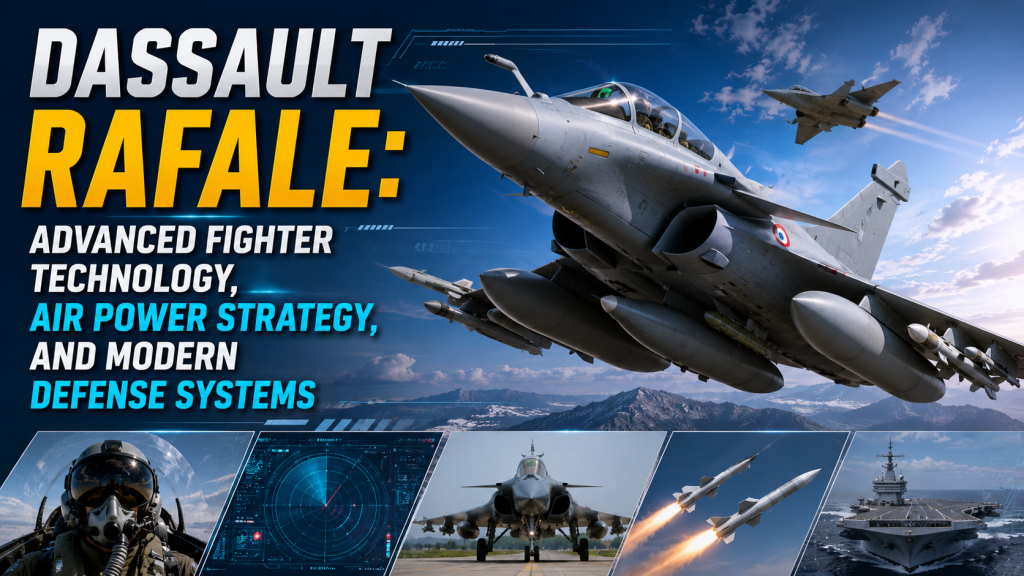
Dassault Rafale continues to represent advanced aerospace engineering, modern combat capability, and strategic defense technology while strengthening air power infrastructure and supporting military modernization in an increasingly technology-driven global security environment.
The Dassault Rafale is one of the world’s most advanced multirole fighter aircraft and has become an important symbol of modern military aviation, defense technology, and strategic air power. Developed by the French aerospace company Dassault Aviation, the Rafale is recognized globally for its advanced combat capabilities, sophisticated avionics systems, and operational versatility.
The Rafale fighter jet attracts global attention because it represents:
- Advanced military technology
- Modern air combat systems
- Strategic defense capabilities
- Aerospace engineering innovation
- National security infrastructure
Modern air forces increasingly require highly advanced fighter aircraft capable of handling:
- Air superiority missions
- Precision strikes
- Surveillance operations
- Maritime defense
- Electronic warfare
As global defense systems become more technology-driven, fighter aircraft like the Rafale continue playing critical roles in national security and military modernization strategies.
The Rafale has also become highly important in discussions involving:
- Defense procurement
- International military partnerships
- Aerospace innovation
- Geopolitical strategy
Its role in modern defense infrastructure highlights the growing importance of advanced military technology in global security systems.
Introduction to Dassault Rafale
The Dassault Rafale is a multirole fighter aircraft developed by Dassault Aviation in France.
The aircraft was designed to perform multiple missions including:
- Air combat
- Ground attack
- Reconnaissance
- Maritime strike operations
Modern fighter aircraft increasingly require flexibility because military operations involve rapidly changing combat environments.
The Rafale is considered a technologically advanced aircraft because of its:
- Aerodynamic design
- Integrated weapon systems
- Electronic warfare capability
- High operational performance
Advanced combat aircraft remain important components of national defense systems worldwide.
Importance of Air Power in Modern Warfare
Air power has become one of the most important elements of modern military strategy.
Modern air forces support:
- National defense
- Border security
- Strategic deterrence
- Surveillance operations
Fighter aircraft provide:
- Rapid response capability
- Tactical superiority
- Long-range operational flexibility
Air superiority is critical because control of airspace significantly influences military operations and national security.
Countries worldwide continue investing heavily in advanced fighter aircraft and aerospace technology to strengthen defense capabilities.
Advanced Aerospace Engineering
The Rafale demonstrates significant advancements in aerospace engineering and military technology.
Modern fighter aircraft require:
- High-speed maneuverability
- Radar integration
- Advanced navigation systems
- Electronic warfare capability
The aircraft uses sophisticated engineering systems to improve:
- Combat performance
- Operational flexibility
- Pilot safety
- Mission efficiency
Aerospace innovation continues evolving rapidly because defense technology remains one of the most advanced industrial sectors globally.
Multirole Combat Capability
One of the Rafale’s major strengths is its multirole capability.
The aircraft can perform:
- Air-to-air combat
- Air-to-ground strike missions
- Maritime operations
- Reconnaissance tasks
Multirole fighter systems are important because modern militaries require operational flexibility in different combat environments.
Advanced military aircraft capable of handling multiple missions improve:
- Defense efficiency
- Tactical readiness
- Operational adaptability
Modern warfare increasingly depends on integrated and versatile defense systems.
Radar and Avionics Technology
The Rafale uses advanced radar and avionics systems designed for modern combat operations.
Avionics systems support:
- Navigation
- Threat detection
- Target tracking
- Communication systems
Advanced radar technology improves:
- Situational awareness
- Combat accuracy
- Operational effectiveness
Modern defense aircraft increasingly rely on electronic systems and digital technology for mission success.
Technology integration has become one of the most important aspects of military aviation.
Electronic Warfare Systems
Electronic warfare capability is essential in modern defense operations.
The Rafale includes systems designed for:
- Threat detection
- Electronic countermeasures
- Signal interference protection
Electronic warfare helps improve aircraft survivability during combat operations.
Modern military systems increasingly depend on:
- Cyber capabilities
- Electronic intelligence
- Signal management
Technology-driven defense strategies continue becoming more important in global security infrastructure.
Defense Modernization and Military Strategy
Countries worldwide are modernizing military infrastructure because defense environments are evolving rapidly.
Defense modernization includes:
- Advanced aircraft acquisition
- Smart weapons systems
- Integrated surveillance networks
Modern air forces require:
- Faster response systems
- Better intelligence capability
- Improved operational efficiency
Military technology now plays a major role in strategic defense planning and national security policies.
India and Rafale Fighter Jets
The Rafale became especially important in India’s defense discussions after its induction into the Indian Air Force.
India focuses heavily on:
- Air defense modernization
- Strategic preparedness
- Advanced military technology
The addition of advanced fighter aircraft strengthens:
- Air combat capability
- Border security
- Defense infrastructure
Modern defense systems are increasingly important because geopolitical and regional security challenges continue evolving.
Strategic Defense and National Security
Defense systems remain essential for protecting:
- National sovereignty
- Airspace security
- Strategic infrastructure
Advanced fighter aircraft support:
- Rapid deployment capability
- Tactical deterrence
- Airspace control
National security strategies increasingly involve:
- Technological superiority
- Aerospace advancement
- Integrated defense systems
Military readiness remains highly important in maintaining long-term security and geopolitical stability.
Aerospace Industry and Technological Innovation
The aerospace industry is one of the most technologically advanced sectors globally.
Aerospace companies invest heavily in:
- Engineering research
- Defense systems
- Material science
- Artificial intelligence integration
Innovation improves:
- Aircraft performance
- Fuel efficiency
- Combat capability
- Operational reliability
The defense and aerospace sectors often influence broader technological advancement and industrial innovation.
Global Defense Industry Growth
The global defense industry continues expanding because countries increasingly invest in:
- Military modernization
- Defense infrastructure
- Strategic technologies
Defense spending supports:
- Aerospace engineering
- Research development
- High-technology manufacturing
Advanced military technology sectors remain closely connected with:
- Geopolitical strategy
- International alliances
- National security planning
Global defense systems are becoming increasingly technology-driven and interconnected.
Artificial Intelligence and Future Air Combat
Future military aviation may increasingly involve:
- Artificial intelligence
- Autonomous systems
- Smart targeting technologies
AI-driven systems could improve:
- Mission analysis
- Threat detection
- Combat decision-making
Military aviation technology continues evolving rapidly because modern defense environments demand advanced operational systems.
Future fighter aircraft may become more digitally integrated and automated.
Defense Partnerships and International Relations
Defense partnerships often influence:
- International cooperation
- Military technology transfer
- Strategic alliances
Defense agreements between countries may strengthen:
- Security cooperation
- Aerospace collaboration
- Diplomatic relationships
Military technology increasingly plays a role in international geopolitical strategy and defense diplomacy.
Cybersecurity and Digital Defense Systems
Modern fighter aircraft increasingly depend on:
- Digital communication systems
- Data processing
- Secure operational networks
Cybersecurity has therefore become essential in modern defense infrastructure.
Military systems require protection against:
- Cyber threats
- Electronic interference
- Information breaches
Digital defense technologies are becoming increasingly important in future military operations.
Training and Pilot Expertise
Advanced fighter aircraft require highly skilled pilots and technical personnel.
Military aviation training involves:
- Combat simulation
- Tactical coordination
- Technology management
Operational efficiency depends heavily on:
- Pilot expertise
- System integration
- Training quality
Human capability remains highly important even in technology-driven military systems.
Future of Military Aviation
Military aviation is expected to continue evolving through:
- Advanced aerospace engineering
- Smart combat systems
- Digital integration
Future air forces may increasingly use:
- AI-assisted operations
- Hypersonic systems
- Autonomous aircraft
Technology innovation will likely remain central to future defense infrastructure and military modernization worldwide.
Conclusion
The Dassault Rafale represents one of the most advanced fighter aircraft systems in modern military aviation and reflects the growing importance of aerospace engineering, digital warfare capability, and strategic defense infrastructure.
Its advanced technology, multirole operational capability, and integration into modern air defense systems highlight the evolving nature of global military strategy and aerospace innovation. As countries increasingly focus on defense modernization and technological superiority, advanced fighter aircraft will likely continue playing essential roles in national security and international defense systems.
The future of military aviation will likely depend on continued innovation in aerospace engineering, artificial intelligence, digital warfare systems, and advanced operational technologies that shape modern defense ecosystems