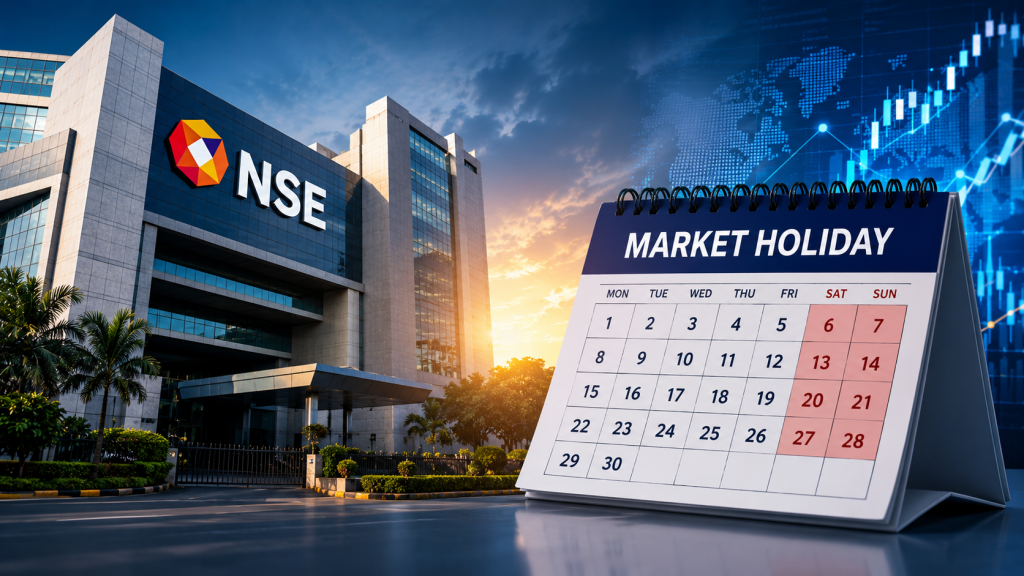
NSE holidays play an important role in India’s financial markets by influencing trading activity, settlement schedules, investment planning, and market sentiment. Understanding stock market closures helps investors and traders make better financial decisions in an increasingly connected global economy.
The National Stock Exchange (NSE) is one of the largest and most important stock exchanges in India. Every day, millions of investors, traders, institutions, and financial professionals participate in market activities through the NSE platform. Because of its central role in India’s financial system, NSE trading schedules and market holidays are extremely important for investors and businesses.
NSE holidays refer to official non-trading days when stock market activities remain closed. On these days:
- Equity trading stops
- Derivatives trading pauses
- Commodity segments remain inactive
- Settlement activities may be delayed
Understanding NSE holidays is important because stock market timing directly affects:
- Trading strategies
- Investment planning
- Portfolio management
- Financial transactions
For traders and investors, market holidays are not simply breaks from trading activity. They influence liquidity, global market reactions, and investment decision-making processes.
As India’s financial markets continue growing rapidly, awareness about NSE trading schedules and holiday calendars has become increasingly important for both retail and institutional investors.
Introduction to NSE
The National Stock Exchange of India is one of the country’s leading financial marketplaces.
The exchange facilitates trading in:
- Equities
- Derivatives
- Exchange-traded funds
- Bonds
- Currency segments
NSE plays a major role in:
- Capital formation
- Investment growth
- Financial market development
Millions of transactions are processed daily through the exchange, making it one of the most technologically advanced trading platforms in the world.
Why NSE Holidays Are Important
NSE holidays affect the functioning of the entire financial market ecosystem.
Market closures influence:
- Trading activity
- Investment timing
- Settlement cycles
- Market liquidity
Investors and traders often plan strategies around holiday schedules because markets may react differently before and after extended breaks.
Holiday awareness becomes especially important for:
- Short-term traders
- Derivatives participants
- Institutional investors
- International market participants
Trading opportunities and risk management strategies may change depending on market schedules.
Types of NSE Holidays
NSE holidays generally fall into multiple categories.
These include:
- National holidays
- Religious festivals
- Special market closure days
- Weekend holidays
India’s diverse cultural and religious calendar results in multiple market closure days throughout the year.
Certain holidays may affect:
- Equity markets
- Commodity segments
- Currency trading
differently depending on the exchange schedule.
Trading Sessions and Market Timing
The stock market operates during fixed trading hours on business days.
During regular sessions:
- Investors buy shares
- Traders execute transactions
- Institutions manage portfolios
When the exchange remains closed during holidays:
- No regular trading takes place
- Market liquidity pauses temporarily
Understanding trading calendars helps investors avoid confusion related to order execution and settlement schedules.
NSE Holidays and Global Markets
Although Indian markets may remain closed during holidays, international financial markets often continue operating.
Global developments during NSE holidays may influence Indian market sentiment once trading resumes.
Important international factors include:
- US market performance
- Oil price movement
- Currency fluctuations
- Global economic news
When Indian markets reopen after holidays, investors may react to international developments that occurred during the closure period.
Impact on Traders
Short-term traders are highly affected by market holidays.
Holiday closures may:
- Increase overnight risk
- Reduce trading opportunities
- Influence volatility after reopening
Traders often monitor:
- Global news
- Commodity prices
- International market trends
during exchange holidays to prepare for the next trading session.
Risk management becomes especially important before long holiday weekends.
Impact on Long-Term Investors
Long-term investors are generally less affected by temporary market closures.
However, holidays still matter because:
- Settlement cycles shift
- Investment planning changes
- Corporate announcements may continue
Long-term investors often use holiday periods to:
- Review portfolios
- Analyze market trends
- Plan future investments
Market holidays also provide opportunities for strategic financial planning without active market pressure.
Settlement Cycles and Financial Transactions
Stock market settlements follow structured timelines.
NSE holidays can affect:
- Fund transfers
- Share settlements
- Dividend processing
- Clearing operations
Investors should understand that transactions initiated before holidays may settle later than usual because exchanges and banking systems may remain closed.
Settlement awareness is particularly important for active traders and institutional investors.
Derivatives and Holiday Volatility
Derivative markets are especially sensitive to holiday schedules.
Options and futures traders monitor:
- Time decay
- Global market movement
- Position risk
before market closures.
Extended holidays may increase uncertainty because international events can influence markets while domestic trading remains paused.
Derivative traders often adjust positions before major holiday breaks to reduce risk exposure.
Psychological Effect of Market Holidays
Market holidays can also affect investor psychology.
During closures:
- Investors analyze news
- Media discussions increase
- Global market developments continue
When trading resumes, emotional reactions sometimes create:
- Sharp market openings
- Increased volatility
- Higher trading volume
Investor sentiment often changes after major economic or geopolitical developments during holiday periods.
Digital Trading and Modern Markets
Technology has transformed stock market participation significantly.
Today, investors can:
- Monitor portfolios online
- Access financial news instantly
- Track international markets in real time
Even during NSE holidays, digital platforms continue providing:
- Market analysis
- Economic updates
- Investment insights
Technology has increased financial awareness among retail investors.
NSE Holidays and Retail Investors
Retail participation in India’s stock market has increased rapidly in recent years.
New investors often need to understand:
- Trading schedules
- Market holidays
- Settlement timing
because confusion regarding exchange holidays can affect investment decisions.
Financial education regarding stock market operations is becoming increasingly important in India’s growing investment culture.
Importance for Businesses and Institutions
Businesses and institutional investors also depend on exchange schedules for:
- Fund management
- Portfolio allocation
- Financial reporting
Large institutions carefully plan transactions around holiday calendars to maintain liquidity and operational efficiency.
Market timing can influence:
- Investment decisions
- Corporate treasury management
- Trading execution strategies
NSE and India’s Financial Growth
The NSE has played a major role in strengthening India’s financial infrastructure.
Strong stock exchanges help:
- Businesses raise capital
- Investors create wealth
- Economic growth accelerate
India’s growing participation in global financial markets increases the importance of efficient exchange systems and structured trading schedules.
NSE holidays are therefore part of a broader financial ecosystem supporting organized market operations.
Globalization and Market Connectivity
Modern financial markets are highly interconnected globally.
Even when Indian exchanges remain closed:
- Global investors remain active
- International markets continue moving
- Economic announcements continue
This global connectivity means investors increasingly monitor international developments regardless of local market holidays.
Global market integration has increased the importance of financial awareness.
Planning Investments Around Holidays
Experienced investors often plan investments strategically around market holidays.
Important considerations include:
- Volatility risk
- Global events
- Liquidity conditions
- Settlement schedules
Investment planning before major holidays can help reduce uncertainty and improve decision-making efficiency.
Professional traders often remain highly cautious before extended market closures.
Future of Digital Trading and Market Operations
Technology continues transforming stock market operations globally.
Future developments may include:
- Faster settlement systems
- Improved trading automation
- Enhanced digital access
However, official market holidays will continue remaining important because financial systems require structured operational schedules and clearing processes.
Organized trading calendars help maintain stability and efficiency in financial markets.
Conclusion
NSE holidays are an important part of India’s financial market structure and directly influence trading activity, investment planning, settlement systems, and market sentiment. Understanding exchange holidays helps investors and traders manage risk, plan transactions, and respond more effectively to global financial developments.
As India’s stock market participation continues growing rapidly, awareness about trading schedules and financial market operations becomes increasingly important for both new and experienced investors.
The National Stock Exchange remains one of the pillars of India’s financial system, and understanding how market holidays affect trading and investment activity is essential for successful participation in modern financial markets.